
STP (Segmentation, Targeting, Positioning): A Strategic Framework in Marketing.
14 min read
As customer expectations continue to evolve, a one-size-fits-all marketing approach is rarely effective. Brands need to understand who their customers are, which audiences offer the strongest opportunities, and how to present their products or services to those audiences. This strategic process is known as Segmentation, Targeting and Positioning (STP).
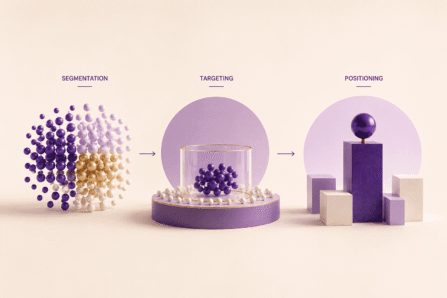
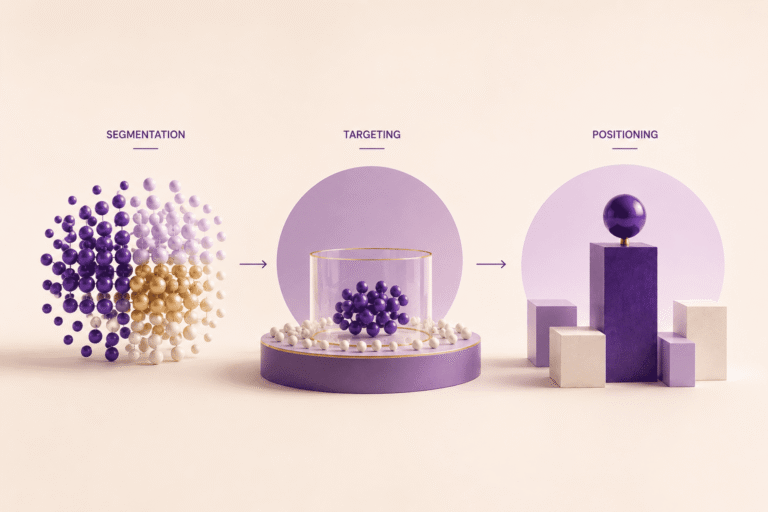
The STP framework helps marketers move from broad market assumptions to more focused, customer-led decisions. Segmentation divides a market into meaningful groups, targeting identifies which groups should receive priority, and positioning defines how the selected audience should perceive a brand.
Integrating STP into professional marketing training can help marketers strengthen strategic thinking, interpret customer insight and develop more relevant communications. This blog explains how the STP framework works, how its three stages connect, and how professionals can apply it to practical marketing decisions.
Key Takeaways
- STP stands for Segmentation, Targeting and Positioning and provides a structured approach to customer-focused marketing.
- Segmentation divides a broad market into groups based on characteristics, needs or behaviours.
- Targeting evaluates those groups to identify the audiences that offer the strongest strategic and commercial potential.
- Positioning determines how a product, service or brand should be perceived relative to alternatives.
- Effective STP decisions should be supported by customer research, CRM data, website analytics and campaign performance.
- Market size alone should not determine targeting decisions; profitability, growth, reachability, competition and strategic fit also matter.
- Strong positioning communicates a relevant point of difference and gives customers a clear reason to choose a brand.
- STP should be reviewed as customer behaviour, competitors and market conditions change.

Understanding STP: The Strategic Core of Marketing
The STP model operates in three connected stages: identifying audience segments (Segmentation), selecting the most appropriate segment or segments (Targeting), and defining how the brand should be understood by those audiences (Positioning).
The framework’s value comes from this sequence. Segmentation builds an understanding of the market. Targeting determines where the organisation should focus. Positioning shapes the value proposition and communication presented to those customers.
For example, customers buying the same service may have different priorities. One may value price, another convenience, while another prioritises quality, expertise or personalisation. Treating them all identically can weaken relevance. STP helps marketers recognise these differences and make more deliberate choices.
1. Segmentation: Knowing Your Audience
Segmentation involves dividing a broad market into smaller groups whose members share relevant characteristics, needs or behaviours. Common approaches include:
- Demographic: Age, income, occupation, education or life stage
- Geographic: Region, climate, location, population density or distance
- Psychographic: Lifestyle, values, goals, interests, attitudes or pain points
- Behavioural: Purchasing habits, brand interactions, product usage, loyalty or engagement
The Market Research Society describes consumer segmentation as a way to identify customers who can be served with distinct propositions and tailored products, pricing, or communications.
Useful segmentation depends on reliable information. Organisations can draw insight from customer surveys, interviews, CRM systems, website analytics, sales data and campaign performance. The objective is not to create as many segments as possible, but to identify differences that can meaningfully influence marketing decisions.

What Makes Customer Segmentation Effective?
Useful market segments should generally be:
- Identifiable: The organisation can define who belongs to the segment.
- Measurable: Its size, behaviour or commercial potential can be assessed.
- Reachable: Suitable channels exist to reach the audience.
- Relevant: The differences between groups are meaningful to the marketing strategy.
- Actionable: The organisation can adapt an offer, message or campaign to the segment.
Marketers should also avoid relying solely on demographics. Customers who appear similar on paper may have very different motivations. Combining demographic data with behavioural and psychographic insight can create a more useful picture.
For example, two professionals considering the same training programme may have different objectives: one may be preparing for promotion, while another may need to solve an immediate workplace challenge. Their motivations can affect both message and channel choice.
2. Targeting: Selecting the Right Segment
Targeting is the second stage of the STP process. Once segments have been identified, marketers evaluate which ones deserve priority. A strong target segment is not simply the largest audience. It should offer an attractive opportunity that the organisation can serve effectively.

Important factors include:
- Size and growth: Is the segment large enough to justify investment, and is demand stable or increasing?
- Profitability: What revenue, margin or customer lifetime value could the segment generate?
- Reachability: Can the audience be reached efficiently through available channels?
- Customer acquisition cost (CAC): What does it cost to acquire customers within the segment?
- Competitive intensity: How established are competitors, and is there room for meaningful differentiation?
- Strategic fit: Does the organisation have the capabilities, expertise and resources to satisfy the segment?
A segment with low acquisition costs may appear attractive, but poor retention or weak margins can reduce its value. Similarly, a highly profitable market may not be suitable if competitors have strong loyalty or the organisation cannot meet customer expectations.
Different Approaches to Targeting
Organisations can adopt different targeting strategies.
Undifferentiated targeting uses a relatively consistent offer across a broad market. This may work where customer needs are similar.
Differentiated targeting focuses on several segments and adapts the proposition or communication for each.
Concentrated targeting focuses primarily on one specialised or niche audience, enabling the organisation to build deeper relevance within that market.
Personalised targeting uses customer and behavioural data to tailor communication to increasingly specific audiences.
Digital platforms have made granular targeting easier, but marketers still need strategic judgement. Technology can identify patterns; it cannot independently determine whether an audience supports the organisation’s long-term objectives.
3. Positioning: Crafting the Right Message
Positioning defines how a product, service or brand should be perceived in the minds of the selected audience compared with competing alternatives.
It should answer a fundamental customer question:
Why should I choose this organisation rather than another option?
Three useful positioning components are:
- Unique Selling Proposition (USP): What creates meaningful differentiation?
- Functional and emotional benefits: What practical and psychological value does the customer receive?
- Positioning statement: How should the offer be understood by the target audience?
Positioning should be specific enough to guide marketing decisions. Claims such as “high quality”, “innovative” or “customer focused” are weak when every competitor can make the same claim.
Differentiation may instead come from specialist expertise, convenience, speed, personalisation, service quality, price, delivery model or industry knowledge. The point of difference must matter to the customer.
The Chartered Institute of Marketing’s guidance on the 7Ps of marketing also highlights how elements such as price, product and physical evidence influence customer perceptions. Positioning therefore needs to be reflected in the wider marketing mix, not only in advertising copy.
Creating a Positioning Statement
A simple positioning structure is:
For [target audience], our [product/service] provides [main benefit] because [reason to believe].
A strong statement should clarify:
- Who the customer is
- What need or problem is being addressed
- What benefit is being offered
- Why the customer should believe the claim
Marketers can also use positioning or perceptual maps to compare brands across dimensions such as premium versus low price, traditional versus innovative, or standardised versus personalised service. These maps can reveal crowded positions, market gaps, and differences between intended and actual brand perception.
How Segmentation, Targeting and Positioning Work Together
STP is most effective when the three stages operate as one decision-making process.
Consider a business software provider.
Through Segmentation, it identifies start-ups, small businesses, medium-sized organisations and large enterprises.
Through Targeting, it determines that growing medium-sized companies offer the strongest balance of demand, profitability, reachability and strategic fit.
Through Positioning, it presents the product as a flexible business platform for growing organisations that need greater capability without the complexity of enterprise software.
This progression aligns customer insight, commercial priorities, and communication.
LBTC’s Strategic Marketing course applies this same logic by covering audience segmentation and prioritisation, message tailoring and differentiated market positioning as part of broader strategic marketing planning.
How STP Supports Personalised and Digital Marketing
One of STP’s main benefits is its ability to make marketing communications more relevant.
Different segments can receive different:
- Website and landing-page messages
- Advertising campaigns
- Email content
- Product recommendations
- Offers
- Social media communication
- Calls to action
Digital analytics can strengthen this process. Google Analytics, for example, allows organisations to create audiences based on shared user attributes and behaviours, helping marketers compare how different groups engage and convert.
CRM systems can add customer history, lead status, purchases and customer value, while advertising platforms can support audience activation.
However, personalisation also creates responsibilities. Where organisations use personal information for profiling or direct marketing, they should consider applicable privacy and data-protection requirements. The UK’s Information Commissioner’s Office guidance explains that profiling can make marketing more relevant but must be handled in accordance with data-protection rules.
For marketers, the principle is straightforward: use data to improve relevance, but do so responsibly and transparently.
Common STP Marketing Mistakes
Several mistakes can weaken an otherwise sound STP strategy.
1. Segmenting Without a Clear Purpose
Segments should influence decisions. Creating customer groups that do not change the offer, channel, message, or investment adds complexity without strategic value.
2. Targeting Only by Market Size
The largest segment is not always the most profitable, accessible or appropriate.
3. Relying on Assumptions
Internal opinions and stereotypes are not substitutes for customer research and behavioural evidence.
4. Using Generic Positioning
If a positioning claim could be copied by every competitor, it is unlikely to create a meaningful advantage.
5. Ignoring Market Change
Customer needs, competitor activity and technology change over time. Segments and positioning should therefore be reviewed periodically.
6. Disconnecting Positioning From Customer Experience
A brand cannot credibly position itself as premium, convenient or highly personalised unless customers experience those qualities throughout the journey.
Measuring STP Performance
STP should contribute to measurable marketing outcomes. Depending on the business model and campaign, useful measures can include:
- Conversion rate
- Customer acquisition cost
- Customer lifetime value
- Lead quality
- Customer retention
- Revenue by segment
- Average order value
- Return on advertising spend
- Engagement rate
Review performance at the segment level where possible. This helps marketers identify which audiences create the strongest results and where budget, positioning or channel strategy may need adjustment.
A structured marketing plan can help connect audience decisions with the customer journey, campaign objectives and measurable outcomes.
Developing Practical STP Skills Through Marketing Training
Understanding the definition of STP is only the starting point. Applying it effectively requires marketers to combine analysis, commercial judgement and communication skills.
Professionals should be able to:
- Analyse customer and market information
- Identify meaningful segmentation variables
- Evaluate market attractiveness
- Assess competitors and strategic fit
- Develop customer profiles
- Define value propositions
- Build positioning maps
- Write positioning statements
- Adapt messages to different audiences
- Measure performance by segment
Practical marketing strategy training can help professionals connect these skills with broader planning, customer experience and the marketing mix. For those seeking deeper development, LBTC’s Advanced Strategic Marketing programme integrates segmentation, targeting and positioning with strategic planning, campaign execution, content and AI-enabled marketing.
The objective is not simply to memorise the STP model, but to use it to make more disciplined marketing decisions.
Conclusion
Segmentation, Targeting and Positioning provide a practical framework for turning broad market information into focused marketing action.
Segmentation helps organisations understand meaningful differences between customers. Targeting identifies the audiences that offer the strongest strategic and commercial opportunity. Positioning communicates a relevant reason for those customers to choose one offer over another.
When these stages are connected, marketing becomes more deliberate, customer-focused and measurable. STP can inform everything from market research and value propositions to digital advertising, content, campaign planning and customer experience.
It should also be treated as an ongoing process. Customer expectations, competitors, technologies and market conditions continue to change, so marketers need to review their segments, targeting priorities and positioning over time.
Through structured marketing and public relations training, professionals can develop the analytical and strategic skills required to apply STP in real business environments and translate customer insight into practical marketing decisions.
FAQs
What is STP in marketing?
STP stands for Segmentation, Targeting and Positioning. It is a framework that helps organisations divide a market into customer groups, select which groups to prioritise and develop a clear market position for those audiences.
What are the three stages of STP?
The stages are Segmentation, which identifies customer groups; Targeting, which evaluates and prioritises those groups; and Positioning, which defines how the offer should be perceived.
What are the four main types of market segmentation?
The four commonly used approaches are demographic, geographic, psychographic and behavioural segmentation.
How do companies choose a target market?
Companies can assess segments according to size, growth, profitability, customer acquisition cost, reachability, competition and strategic fit.
What is positioning in marketing?
Positioning describes how a brand, product or service should be perceived by its target audience relative to competing alternatives.
How does STP support personalised marketing?
STP helps marketers identify differences between audiences and adapt messages, offers, content, channels and calls to action accordingly.
Is STP relevant to digital marketing?
Yes. Website analytics, CRM systems and advertising platforms provide behavioural and customer data that can support segmentation, targeting, audience activation and performance measurement.
Can STP be used in B2B marketing?
Yes. B2B markets can be segmented by factors such as company size, sector, location, buying behaviour, organisational need or decision-maker role.
How can marketing training improve STP skills?
Marketing training can help professionals analyse customer data, evaluate target markets, develop value propositions, create positioning strategies and apply STP to practical campaign and planning decisions.