

5 Emotional Intelligence Skills Every Leader Must Master in 2027
9 min read
As organisations plan for 2027, new managers face a familiar challenge: their results increasingly depend on other people. Technical knowledge remains important, but everyday decisions also influence colleagues’ confidence, workload and willingness to speak up. Emotional intelligence helps leaders recognise those effects, understand their reactions and respond with clarity and fairness.
For first-time supervisors, emotional intelligence is not about avoiding difficult decisions. It means remaining composed when a deadline slips, asking questions before assigning blame and addressing poor performance without undermining dignity. These capabilities matter in offices, technical teams, customer service, public services and small businesses.
This article explains five emotional intelligence skills every emerging leader can practise in 2027. It includes workplace examples, a practical development plan and guidance on choosing relevant leadership courses. It also separates research findings from exaggerated promises.
Key takeaways
- Self-awareness and self-regulation help managers recognise triggers and respond deliberately, not impulsively.
- Intrinsic motivation supports consistent effort, but good managers also remove practical barriers that make work frustrating.
- Empathy and relationship management strengthen listening, feedback and conflict resolution without replacing standards or accountability.
- Emotional competencies can improve with practice and training; however, no course guarantees better team performance.
What is emotional intelligence in leadership?
Emotional intelligence describes abilities and behaviours involved in recognising, understanding and managing emotions, both your own and other people’s. Researchers use different models and assessments. As a result, managers should avoid treating one checklist as a definitive psychological test.
For practical leadership development, Daniel Goleman’s emotional intelligence framework provides a useful foundation built around five key components: self-awareness, self-regulation, motivation, empathy and social skills. Managers can strengthen these capabilities through learning, self-reflection, and consistent practice, improving their leadership approach and workplace interactions.
However, emotional intelligence does not mean trying to identify colleagues’ private feelings or assuming their emotions. Instead, emotionally intelligent leaders focus on understanding different perspectives, checking assumptions and making balanced decisions while respecting professional boundaries and maintaining positive working relationships.
Why emotional intelligence matters in Leadership
New managers often move from completing their own tasks to achieving results through others. They must allocate work, resolve misunderstandings and explain decisions that will not please everyone. Emotional intelligence in the workplace helps with the interpersonal judgment these tasks require.
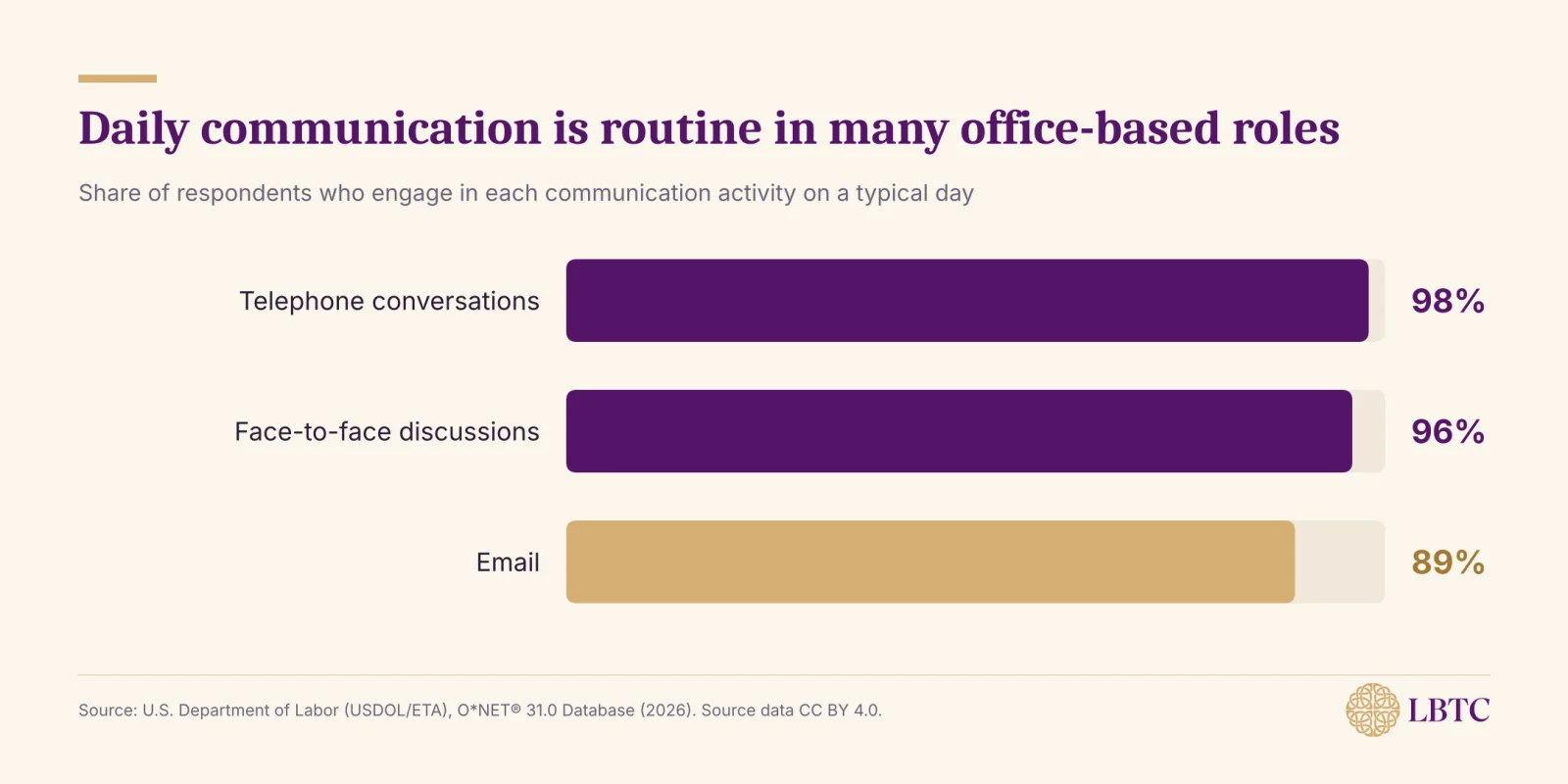
Official US occupational data highlights the communication demands of supervisory roles. According to the O*NET OnLine profile for first-line office and administrative supervisors, 96% of respondents reported daily face-to-face discussions, 98% reported daily telephone conversations, and 89% used email every day. Although these figures do not directly measure emotional intelligence, they highlight the importance of effective communication in supervisory responsibilities.
A leader with strong emotional intelligence can:
- Communicate more clearly
- Build trust with employees
- Improve employee engagement
- Manage conflict professionally
- Make better decisions under pressure
- Support team motivation
- Lead change more effectively
- Strengthen workplace culture
For managers, emotional intelligence is particularly valuable when handling workplace challenges, building professional relationships and communicating with team members. Developing these skills requires consistent practice, self-reflection and constructive feedback. By applying emotional intelligence in everyday management situations, leaders can strengthen their communication, approach conflicts more thoughtfully and create a more supportive working environment.
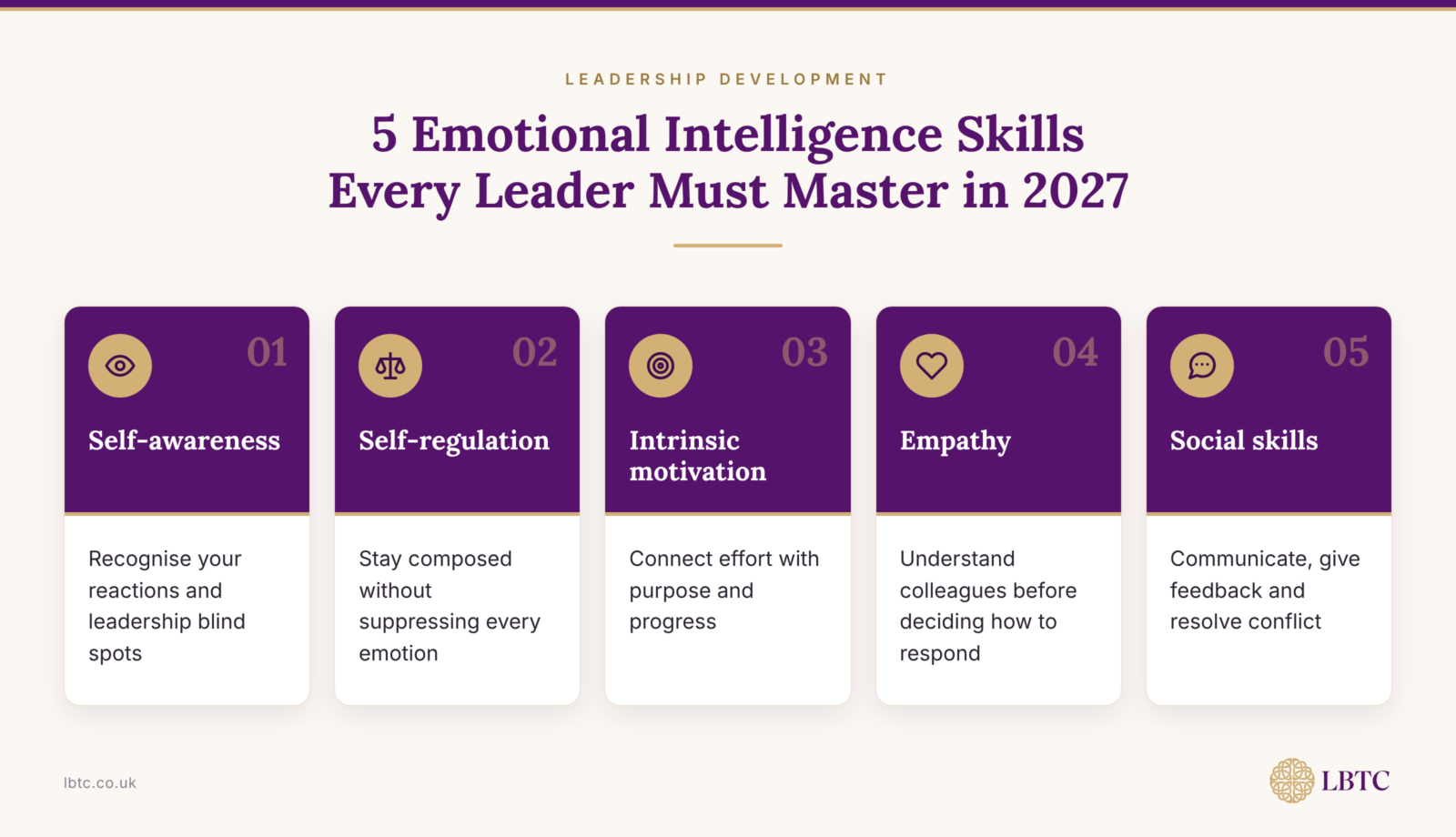
1. Self-awareness: recognise your reactions and leadership blind spots
Self-awareness is the ability to notice what you are feeling, identify its likely trigger and understand how it may shape your conduct. A leader who feels criticised during a project review might interrupt, become defensive or dismiss reasonable concerns. Recognising the response makes a different choice possible.
Start with a short reflection after difficult interactions. Record what happened, your first interpretation, how you responded and what you might do differently. Then ask a trusted colleague for one specific observation. For example: ‘When I challenge an idea in meetings, do I leave enough time for others to respond?’ Concrete questions produce more useful feedback than asking whether you are a good leader.
Example: A team leader notices irritation when the same customer complaint keeps coming up. Rather than assuming employees are careless, they check whether unclear instructions or a faulty handover caused the repetition. This encourages investigation instead of an immediate judgement.
Self-awareness has limits. Reflection can become rumination, and 360-degree feedback can reflect workplace politics. Therefore, compare several observations over time and focus on behaviours you can change. The goal is more accurate judgement, not constant self-monitoring.
2. Self-regulation: stay composed without suppressing every emotion
Self-regulation involves managing emotional reactions so that your response fits the situation. It is particularly valuable when staff make mistakes, customers are upset, or priorities change unexpectedly. Composure is not the absence of frustration; it is the ability to communicate without making frustration the team’s problem.
Use a simple sequence: identify the trigger, separate facts from assumptions, and decide what action the situation requires. If a deadline is missed, ask what work remains, what prevented progress and what must happen next. You can be firm about consequences without raising your voice or assigning motives prematurely.
Example: A project coordinator receives a last-minute request from a senior stakeholder. Instead of forwarding the pressure directly to the team, they clarify urgency, review capacity, and negotiate priorities. This models calm decision-making and protects important work.
Avoid confusing regulation with emotional suppression. Staff may need an honest acknowledgement that circumstances are difficult. Equally, persistent stress can signal poor staffing or unrealistic targets rather than a lack of individual resilience. Effective leaders address structural causes as well as personal responses.
LBTC’s Leadership Essentials course covers recognising personal triggers and practising leadership composure, making it relevant to professionals seeking to strengthen their leadership skills.
3. Intrinsic motivation: connect effort with purpose and progress
Motivation within the five-part framework concerns initiative, commitment and persistence. For leaders, intrinsic motivation means finding a meaningful reason to maintain standards and improve performance, rather than relying solely on recognition, bonuses or external pressure. However, leaders cannot simply instruct colleagues to feel inspired.
Begin by clarifying what good work achieves. Explain who benefits, which decisions employees can influence and how progress will be recognised. Then remove unnecessary obstacles. A team will struggle to stay motivated if responsibilities are unclear, tools are unreliable, or priorities change without explanation.
Example: An operations team faces repeated process errors. Rather than delivering another motivational speech, the leader involves team members in reviewing the handover process, agrees on improvements and monitors progress weekly. This helps employees recognise their contributions and understand the impact of their work.
Intrinsic motivation also requires boundaries. Commitment should not become an expectation of unpaid overtime or permanent availability. Leaders need to balance purpose with realistic workloads, rest and fair treatment. Emotionally intelligent leadership connects ambition with sustainable working conditions.
4. Empathy: understand colleagues before deciding how to respond
Empathy means making a genuine effort to understand another person’s perspective and emotional experience. It strengthens leadership communication by challenging quick assumptions. A team member who becomes quiet in meetings may be uncertain, overloaded, excluded or simply reflective. Leaders should seek to understand the reason rather than make assumptions.
Practise perspective-taking by asking open questions, allowing time to answer, and checking your understanding. You might say: ‘I noticed the handover was difficult this week. What made it harder than expected?’ Listen for practical information and emotional concerns. Afterwards, agree on a response that balances individual needs with organisational responsibilities.
Example: A leader learns that a team member is struggling with a change in working arrangements. Rather than dismissing the concern, they listen carefully, explore reasonable adjustments and explain any operational requirements that cannot change. This demonstrates empathy while maintaining professional expectations.
Importantly, empathy does not mean agreeing with everyone or encouraging unnecessary personal disclosures. Leaders should respect confidentiality, avoid assumptions about personal circumstances, and seek appropriate organisational support when needed. In hybrid teams, regular communication helps leaders understand concerns rather than interpreting silence as disengagement.
5. Social skills: communicate, give feedback and resolve conflict
Social skills help leaders build effective working relationships. They include active listening, clear communication, constructive feedback, influencing others and conflict resolution. These skills are particularly valuable when workplace challenges require practical solutions rather than reassurance alone.
A useful feedback approach is to describe what happened, explain its impact, invite the other person’s perspective and agree on the next steps. For example: ‘The weekly report arrived after the handover, so the next team lacked the figures. What happened, and how can we ensure it arrives on time next week?’ This encourages constructive discussion rather than assigning blame.
When colleagues disagree, leaders should listen to both perspectives before concluding. Identify shared objectives, distinguish factual disagreements from differences of opinion and agree on appropriate solutions. If misconduct or discrimination is alleged, formal organisational procedures must take priority over informal conflict resolution.
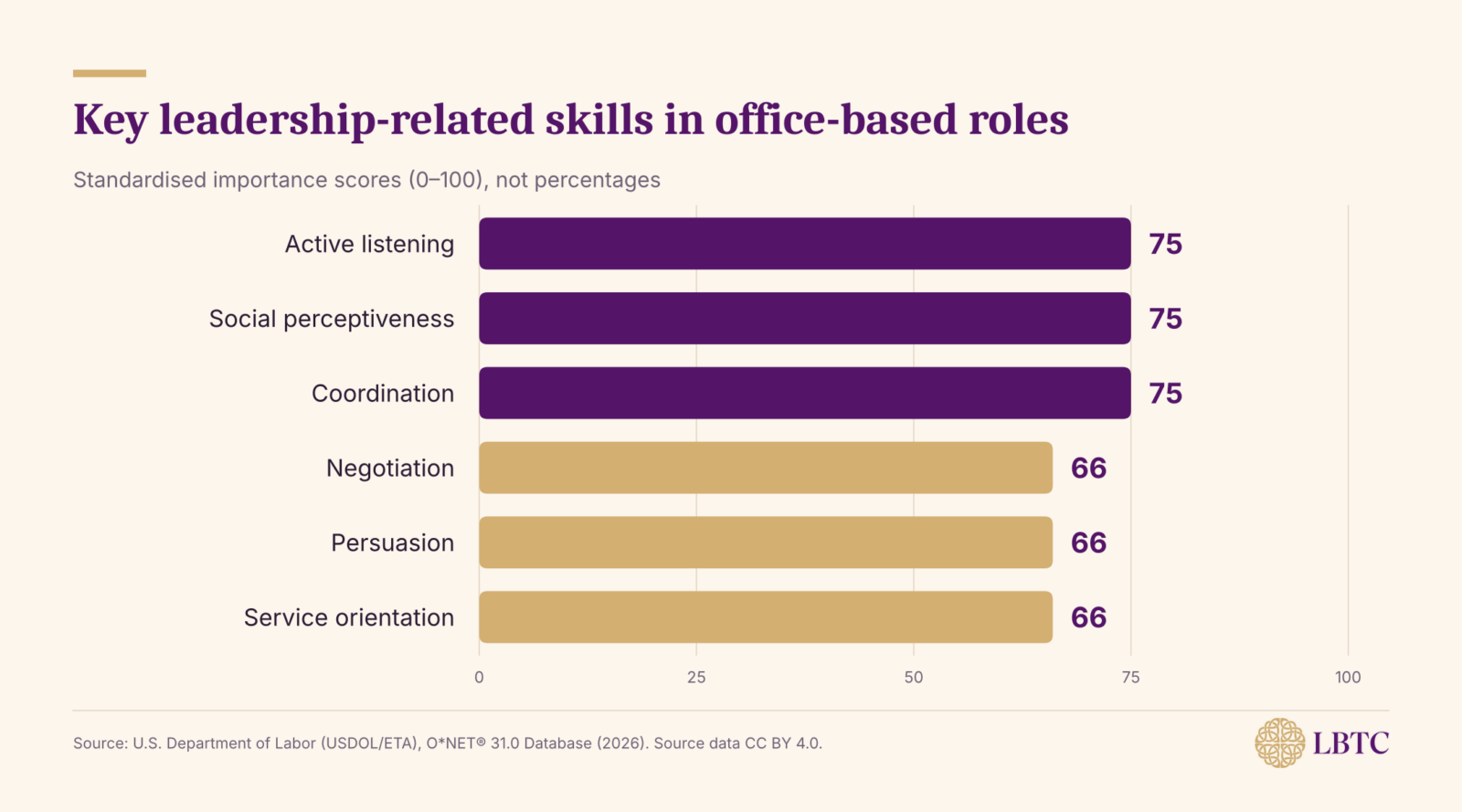
The O*NET occupational profile assigns standardised importance scores of 75 out of 100 to active listening, social perceptiveness and coordination, and 66 out of 100 to negotiation and persuasion among US professionals managing office and administrative support teams. These findings highlight the importance of interpersonal skills in managing teams, although they do not directly measure leadership effectiveness or training outcomes.
Good social skills do not require a charismatic personality. A quieter manager can lead effectively by preparing conversations, listening accurately and following through on decisions.
What the occupational evidence tells managers
Different communication channels present different risks of misunderstanding. Leaders should therefore choose the most appropriate communication method for each situation. Routine updates may be communicated in writing, while sensitive feedback is better addressed through private conversations. Resolving conflicts involving several individuals requires careful preparation, clear communication and appropriate follow-up.
The findings highlight the importance of interpersonal skills in leadership and team management. However, communication needs vary across industries, organisations and leadership roles. Therefore, leaders should apply these insights alongside their professional judgement and an understanding of their teams’ specific needs.
How to develop emotional intelligence in 30 days?
Developing emotional intelligence works best when practice is specific and repeatable. Choose one behaviour at a time, then review whether colleagues experience a difference. The following four-week plan offers a starting point:
Week 1 — Observe. Record three situations that triggered a strong reaction. Note the facts, the interpretation you made and the response you chose. Ask one colleague for feedback on your listening or meeting behaviour.
Week 2 — Regulate. Before a difficult conversation, write down the outcome you need and the assumptions you must check. Practise a calm opening question. Afterwards, assess whether you stayed constructive while maintaining standards.
Week 3 — Connect. Hold two brief coaching conversations. Ask what is working, what is difficult and what support would help. Summarise what you heard before offering solutions. Do not promise changes beyond your authority.
Week 4 — Apply. Use a structured feedback approach for a real work issue. Agree responsibilities and a follow-up date. Compare your approach with the first week’s observations and select the next development goal.
Research suggests that emotional intelligence skills can improve through training, although outcomes vary. A 2024 systematic review of workplace emotional-competency training examined 50 studies, including 27 studies with control groups. The analysis found a moderate average improvement in emotional competencies, with a standardised mean difference of approximately 0.46. However, differences in study methods and quality highlight the importance of combining structured training with practical experience and continuous development.
Applying emotional intelligence to hybrid and changing teams
Hybrid working can make communication and understanding more challenging. A short email may appear abrupt, while a quiet participant in a meeting may be concentrating rather than disengaged. Therefore, leaders should establish clear communication expectations and encourage open discussions to prevent misunderstandings.
During organisational change, leaders should explain what has been decided, what remains uncertain and when further updates will be provided. Acknowledge employees’ concerns without assuming how they feel. Encourage team members to identify potential risks and suggest practical improvements.
Emotionally intelligent leaders also recognise that disagreements don’t always stem from interpersonal issues. Sometimes unclear processes, conflicting responsibilities or unrealistic workloads create tension. Addressing these underlying problems through clear communication and well-defined responsibilities can be more effective than focusing solely on relationships.
Choosing leadership courses that build emotional intelligence
The most relevant leadership courses connect concepts with observable practice. For first-time managers, look for exercises involving self-regulation, difficult conversations, feedback, listening and action planning. Ask how participants practise, receive feedback and apply learning after the programme. A course title alone does not establish its suitability.
LBTC’s Leadership and Management Training subject page provides the broad starting point. For new managers, Leadership Essentials (3 days) directly covers leadership mindsets, triggers and composure. The Leadership Essentials (5 days) programme is another option for developing foundational leadership behaviours. For supervisors supporting organisational transitions, Strategic Change Management Essentials addresses resistance, resilience and change communication.
Choose a programme that matches your responsibility, experience and immediate challenges. The Advanced Leadership (5 days) programme and Leadership Excellence Programme focus on more senior strategic responsibilities. They are possible later-stage options, not substitutes for introductory training. Check course schedules and content before enrolling.
Conclusion
Emotional intelligence in leadership is most valuable when it improves everyday decisions, communication and workplace relationships. Self-awareness helps leaders recognise their reactions, while self-regulation enables them to respond calmly under pressure. Intrinsic motivation provides direction, empathy strengthens understanding, and social skills support effective communication, collaboration and conflict resolution.
As organisations prepare for 2027, developing these five emotional intelligence skills can help leaders manage workplace challenges, build stronger professional relationships and create a more supportive working environment. However, emotional intelligence requires continuous learning, self-reflection and practical application rather than relying on theoretical knowledge alone.
For emerging and experienced leaders, the key is to identify areas for improvement, practise effective leadership behaviours and seek constructive feedback. Structured leadership and management training can support this development by providing practical knowledge and guidance. Ultimately, consistently applying emotional intelligence helps leaders make more informed decisions, strengthen team relationships, and approach leadership responsibilities with greater confidence.
Frequently asked questions
Can new managers learn emotional intelligence?
Yes, emotional competencies can be developed through structured practice and training. Research reports average improvements, although study quality and results vary. Coaching, reflection and feedback help managers apply learning to real situations.
What is the difference between empathy and emotional intelligence?
Empathy concerns understanding another person’s perspective or feelings. Emotional intelligence is broader and also includes recognising and regulating your own reactions, motivation and relationship management.
How can I improve emotional intelligence during difficult conversations?
Prepare the facts, identify your emotional trigger and explain the issue without personal labels. Ask for the other person’s perspective, agree on a concrete next step and follow up. Use formal procedures where required.
Which emotional intelligence skill should a first-time manager develop first?
Self-awareness is a practical starting point because it helps you notice patterns in your response. However, the most urgent skill depends on your team’s needs and your present responsibilities.
Do online leadership courses develop emotional intelligence?
They can support development when they involve live discussion, realistic practice, feedback and follow-through. Delivery mode alone does not determine learning quality. Check the course agenda and intended audience before enrolling.


