

Why Media Relations and Press Strategy Matter in Modern PR
8 min read
In today’s fast-moving digital world, organisations need more than advertising campaigns to stand out. Audiences are constantly bombarded with messages from brands, influencers, news outlets, social platforms, and marketing campaigns. This makes strong public relations, strategic communication, and media relations essential for any business that wants to build trust, credibility, and long-term customer relationships.
A well-planned PR strategy helps organisations communicate quickly, engage the right target audience, and protect their brand reputation. Whether a company is launching a new product, responding to a crisis, managing stakeholders, or building visibility through social media marketing, public relations plays a central role in successful business communication.
For communications professionals, marketers, business leaders, agencies, and anyone interested in developing PR expertise, a PR course can provide the tools, skills, strategies, and knowledge needed to navigate today’s complex media environment.
Key Takeaways
- Public relations PR helps organisations manage reputation, credibility, and relationships with the media, customers, stakeholders, and the wider community.
- Media relations focuses on building connections with journalists, publications, and media outlets to secure earned coverage.
- A communications strategy provides the structure for how an organisation plans, creates, and delivers messages across different channels.
- Crisis communication helps brands communicate quickly and clearly during high-pressure situations.
- Social media marketing, influencer marketing, and content creation are now essential parts of modern public relations.
- A PR course or certificate program can help professionals develop skills in writing, storytelling, campaign planning, measurement, and strategic communication.
Understanding Public Relations, Media Relations, and Press Strategy
What Is Public Relations?
Public relations is the practice of managing how an organisation communicates with its audience, stakeholders, media, customers, employees, and the public. It focuses on reputation, trust, credibility, and relationships.
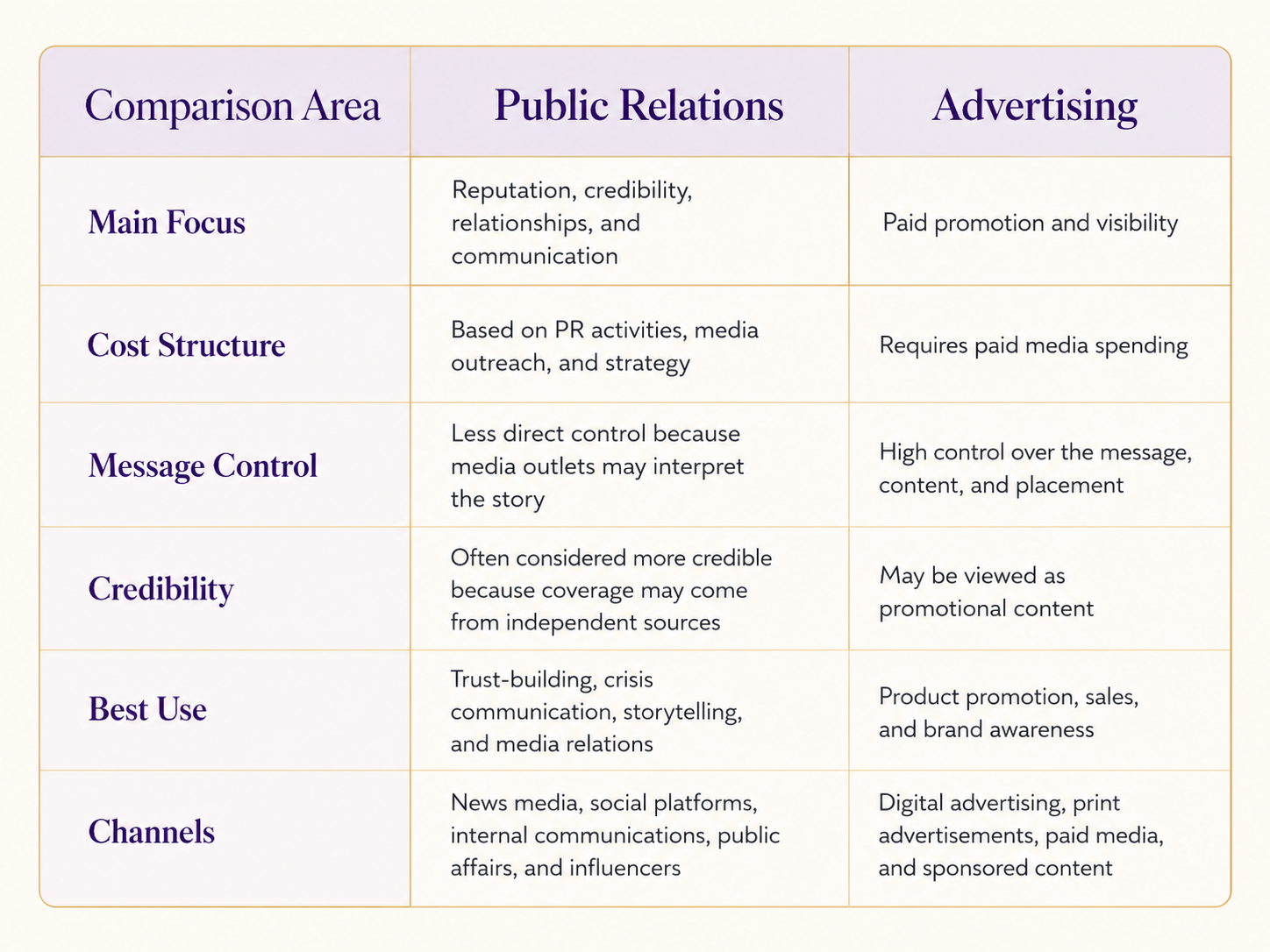
Unlike advertising, where a business pays directly for visibility, public relations often focuses on earned media, storytelling, persuasive communication, and strategic relationship-building. PR professionals help brands create messages that inform, influence, and engage their audience.
Public relations can include media relations, crisis communication, corporate communications, internal communications, public affairs, social media, influencer marketing, content creation, campaign planning, reputation management, and stakeholder communication.
What Is Media Relations?
Media relations is a key part of public relations. It focuses on managing relationships between an organisation and journalists, editors, broadcasters, bloggers, and media outlets.
Strong media relations help a brand gain positive media coverage, respond to press enquiries, and become a trusted source of information. This is especially important when a business wants to increase visibility, launch a marketing campaign, support advertising campaigns, or respond to public issues.
For communications professionals, media relations is one of the most valuable PR skills because it helps create credibility through third-party coverage.
What Is Press Strategy?
Press strategy is the plan behind how an organisation communicates with the media. It helps PR professionals decide what to say, when to say it, who to contact, and which channels to use.
A strong press strategy includes a clear communications strategy, target audience research, key message development, media outreach planning, social media planning, campaign planning, crisis communication preparation, spokesperson training, measurement, and stakeholder engagement.
Press strategy ensures that communication supports business goals, marketing campaigns, public affairs activity, and long-term brand success.
Why Media Relations Matter in Modern PR?
1. Building Trust and Credibility
Modern audiences are more selective about the messages they believe. Paid advertising can be useful, but people often know when a brand is trying to sell something. Earned media coverage can feel more credible because it comes through independent media sources.
When a respected publication, journalist, or media outlet covers a brand, product, campaign, or leader, the organisation benefits from that source’s credibility. This can help build trust with customers, stakeholders, and the wider community.
2. Reaching the Right Target Audience
A successful PR strategy depends on understanding the target audience. Not every message belongs on every platform. Some campaigns work best through industry media, while others need social platforms, influencers, podcasts, local press, or corporate communications channels.
For example, a technology business may focus on trade publications and LinkedIn. A consumer brand may focus on lifestyle media, TikTok, Instagram, influencers, and social media marketing. A public affairs campaign may focus on policy audiences, community stakeholders, and specialist news outlets.
3. Supporting SEO and Online Visibility
Media relations can also support SEO. When a brand receives online coverage from trusted websites, it can improve visibility, increase referral traffic, and strengthen digital authority.
PR and SEO now work closely together. A strong communications strategy can help brands create stories that are valuable for journalists, search engines, and audiences. This includes using relevant keywords, creating useful content, earning backlinks, and building a consistent online brand presence.
Why Press Strategy Matters?
1. Clear Communication Planning
Communication planning is essential for successful public relations. Without a plan, messages can become inconsistent, unclear, or poorly timed.
A press strategy helps an organisation decide what message to communicate, who it is for, which media outlets or social platforms to use, which stakeholders to inform, how success will be measured, and how the organisation should respond if issues arise.
2. Strategic Communication Across Channels
Modern PR involves many channels. A brand may need to communicate through traditional media, social media, internal communications, corporate communications, influencer marketing, paid advertising, email, events, and public affairs.
Strategic communication ensures that all these channels work together. The message should be consistent, but it may need to be adapted for each platform. This is why a communications strategy is so important.
3. Crisis Communication and Reputation Management
Crisis communication is one of the strongest reasons to have a press strategy. When a crisis happens, organisations need to communicate quickly, clearly, and responsibly.
A crisis may involve product issues, customer complaints, data security concerns, leadership changes, negative media coverage, social media backlash, public affairs issues, or internal communication problems.
During a crisis, delays or unclear messages can damage trust. A strong crisis communication plan helps PR professionals prepare statements, brief spokespeople, manage media questions, update stakeholders, and reduce misinformation.
Comparison Table: Public Relations vs Advertising
Press Strategy in Action
Product Launch Campaign
A product launch needs more than a single announcement. A strong PR plan should connect media relations, social media marketing, influencer marketing, content creation, and advertising campaigns.
A launch strategy may include researching the target audience, creating key messages, writing a press release, preparing media materials, identifying journalists and influencers, planning social media content, coordinating with the marketing campaign, preparing spokespeople, and measuring coverage, engagement, and sales impact.
This type of campaign planning helps a business create a stronger launch and reach its audience across multiple channels.
Crisis Communication Campaign
In a crisis, an organisation must act quickly, accurately, and with empathy. A crisis communication plan may include confirming the facts, preparing a holding statement, choosing a spokesperson, informing internal teams, communicating with stakeholders, responding to media enquiries, monitoring social media, correcting misinformation, and reviewing the response after the crisis.
This process helps the business communicate quickly and reduce reputational risk.
Public Affairs Campaign
Public affairs is another important area of public relations. It focuses on communication with government, policymakers, regulators, communities, and public stakeholders.
A public affairs campaign may involve research, policy messaging, stakeholder mapping, community engagement, media relations, corporate communications, persuasive communication, public consultation, and reputation management.
Media Relations in Action
Building Relationships with Journalists
Media relations depend on trust. Journalists are more likely to engage with PR professionals who provide accurate, relevant, and timely information.
To build strong media relationships, communications professionals should research the journalist’s area of focus, send relevant story ideas, avoid generic pitches, provide useful data and expert comment, respond quickly to requests, be honest, respect deadlines, and offer credible spokespeople.
Creating Strong Media Pitches
A good media pitch should be clear, concise, and relevant. It should explain why the story matters now and why it fits the journalist’s audience.
A strong pitch often includes a clear subject line, a short introduction, the main story angle, supporting facts or research, a quote or expert insight, and a clear reason why the story matters to the audience.
Good writing and storytelling skills are essential. A PR course can help learners develop these skills and understand how to create messages that journalists want to use.
Using Social Media in Media Relations
Social media has changed how media relations work. Journalists often use social platforms to find sources, track trends, and share stories. PR professionals can also use social media to engage journalists, monitor conversations, and amplify media coverage.
Social media marketing and media relations now often work together. A media story can be shared across LinkedIn, X, Instagram, TikTok, Facebook, newsletters, and company websites to increase reach and engagement.
The Role of Influencer Marketing in PR
Influencer marketing has become an important part of modern public relations. Influencers can help brands reach specific communities and build trust through authentic content creation.
However, influencer marketing should be planned carefully. The influencer must match the brand, audience, message, and campaign goals. PR professionals should consider credibility, audience fit, engagement quality, content style, and risk management.
Influencer marketing can support product launches, brand awareness, community engagement, social media marketing, customer relationships, and campaign storytelling.
Generative AI in Public Relations
Generative AI is becoming a useful tool in public relations and communications. PR professionals can use generative AI to support writing, research, content creation, campaign planning, media monitoring, and idea development.
Generative AI can help draft press releases, brainstorm campaign ideas, create social media content, summarise research, analyse audience feedback, prepare communication plans, and support crisis communications.
However, generative AI should not replace human judgment. PR requires ethics, accuracy, empathy, creativity, and strategic thinking. Communications professionals still need to carefully review AI-generated content and verify facts.
Skills Developed in a PR Course
A PR course or certificate program can help learners develop the practical skills needed for a career in public relations, communications, marketing, media relations, or corporate communications.
A strong program focuses on both theory and practice. Learners may explore public relations principles, media relations, strategic communication, business communication, crisis communication, internal communications, corporate communications, public affairs, social media marketing, influencer marketing, campaign planning, content creation, persuasive communication, writing for media, stakeholder management, measurement, SEO, and digital PR.
This training can prepare professionals to work in agencies, corporate teams, charities, public sector organisations, start-ups, and marketing departments.
Who Should Take a PR Course?
A PR course is useful for many learners and professionals, including communications professionals, marketers, business owners, students, social media managers, public affairs professionals, agency teams, brand managers, and content creators.
The best public relations courses help learners develop confidence, practical knowledge, and communication skills that can be applied in real business situations.
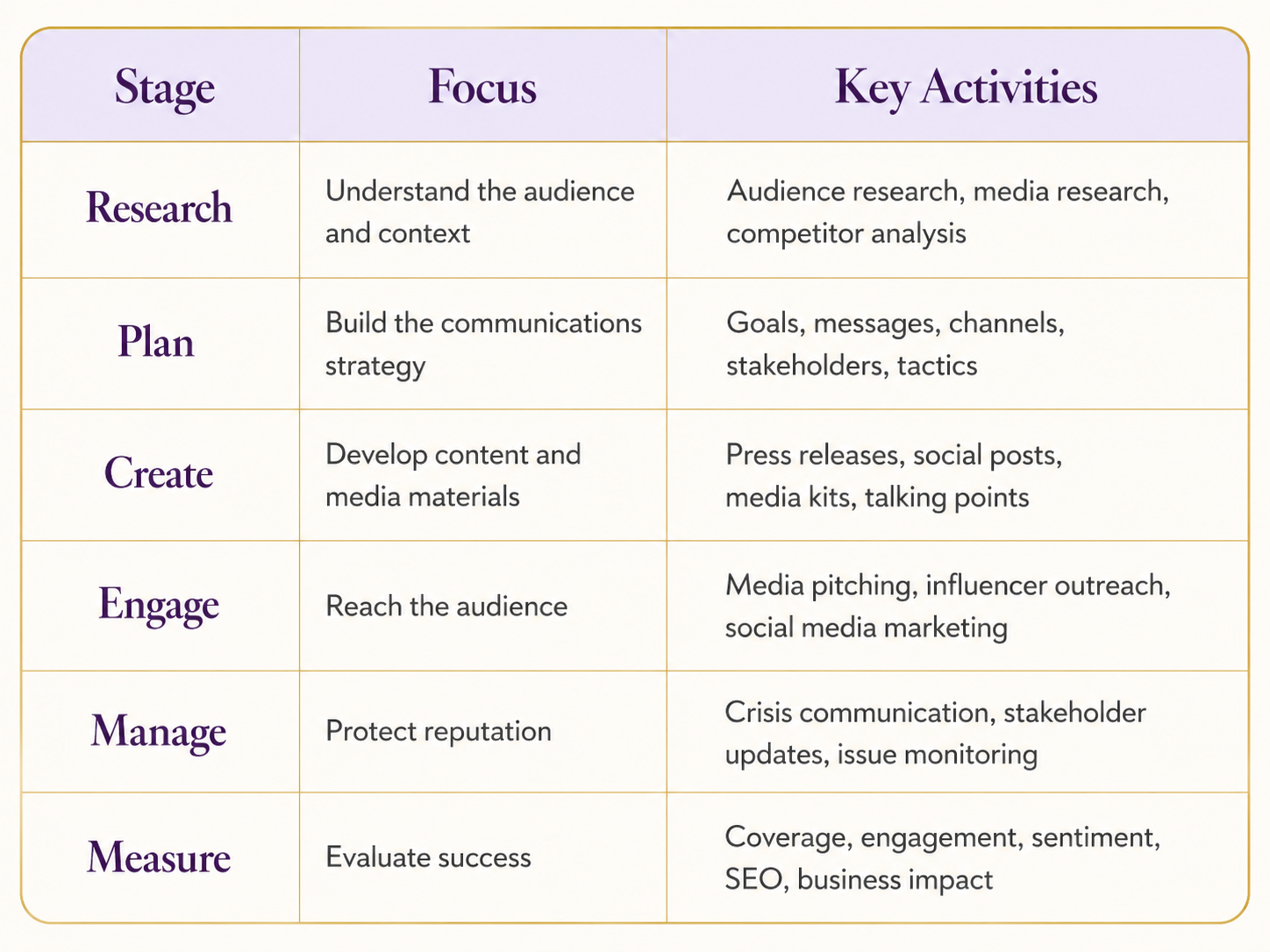
Simple PR Strategy Framework
Why PR Supports Business Success
Public relations supports business success by helping organisations build trust before they need it. A business with strong media relationships, clear messaging, and a prepared crisis communication plan is better positioned to handle both opportunities and challenges.
PR can support brand awareness, customer relationships, sales activity, stakeholder trust, community engagement, reputation management, marketing campaigns, corporate communications, SEO visibility, public affairs goals, and long-term credibility.
Conclusion
Media relations and press strategy are essential in modern public relations because they help organisations communicate with clarity, credibility, and purpose. In a crowded digital environment, businesses need more than advertising to stand out. They need strong relationships, strategic communication, trusted media coverage, and clear communication planning.
A strong communications strategy helps brands reach the right target audience, manage stakeholders, support marketing campaigns, and respond effectively during a crisis. Media relations builds trust with journalists and creates opportunities for earned media coverage. Social media marketing, influencer marketing, generative AI, content creation, and SEO now add even more tools to the modern PR toolkit.
For communications professionals, marketers, business owners, and students, a PR course or certificate program can provide valuable training in public relations, crisis communication, corporate communications, media relations, persuasive communication, and campaign planning. With the right skills and knowledge, professionals can develop successful PR strategies, engage audiences, protect brand reputation, and navigate the changing media landscape with confidence.
Frequently Asked Questions (FAQ’s)
1. Why is media relations important?
Media relations is important because it helps organisations build relationships with journalists and gain credible earned media coverage. This can improve visibility, trust, and brand reputation.
2. How does social media support PR?
Social media helps PR professionals share messages, engage audiences, monitor conversations, support campaigns, and amplify media coverage across social platforms.
3. What is the difference between PR and advertising?
PR focuses on reputation, credibility, relationships, and earned media. Advertising focuses on paid promotion and controlled messaging. Both can support a wider marketing campaign.
4. What skills do communications professionals need?
Communications professionals need strong skills in writing, research, storytelling, planning, media relations, crisis communication, stakeholder management, social media, measurement, and strategic communication.